Stillwater, MN · Garage Door Service
Stillwater's housing runs 1950-2002, median 1978, in a cold-severe climate. Here's how to tell if your garage door's original hardware is worth saving or replacing.
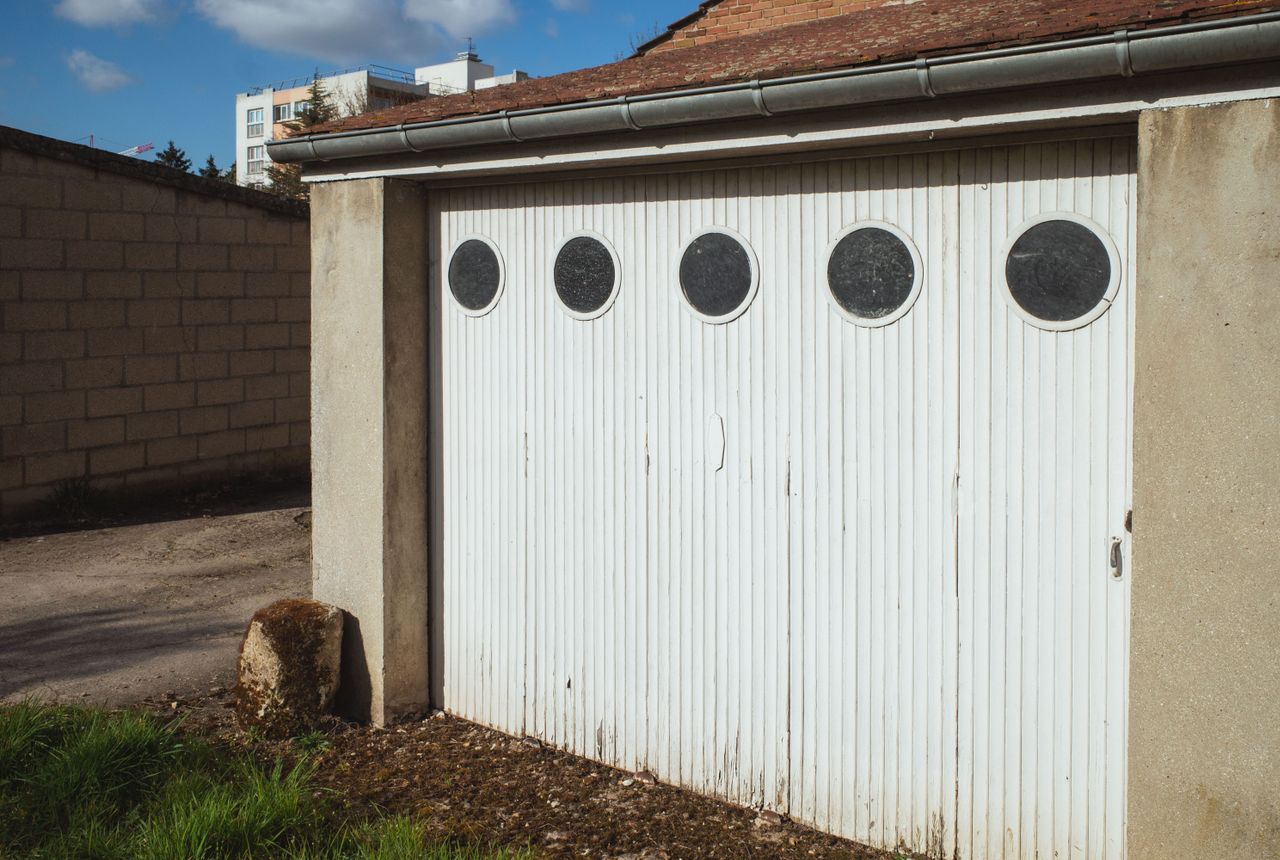
Most of the houses we get called to sit in a build window of 1950 to 2002, with the median landing around 1978. That's not a small range - it means we see everything from postwar single-panel doors bolted to side-mount hardware, to the sectional steel doors that became standard by the late 70s and 80s. Across the 24 named areas in this service territory, the pattern repeats: a heavy concentration of 1960s and 70s stock, the kind of build era where garages were framed for a specific door size and the tracks were set once and never touched again.
When a door from that era starts sticking or the spring lets go, the question isn't just "is it broken" - it's whether the opening, the track spacing, and the header clearance still match anything sold today. A lot of these garages were never resized when the neighborhood turned over, so what looks like a simple repair sometimes runs into a frame that's a half inch narrower than modern rail kits expect. That's the starting point for every call: how old is the bones of this garage, not just the door hanging in it.
The most common mistake is treating every old door as either "fine" or "junk" with nothing in between. A door built during the 1960s-70s run that's been kept dry and adjusted occasionally can still have good panels and a sound frame even if the spring is shot or the rollers are worn to nubs. People hear a bang or a door that won't budge and assume the whole unit is done, when it's often one part - usually the torsion spring or a cable - that failed on hardware that's otherwise holding up fine.
The opposite mistake happens too: assuming an old door just needs a spring swap when the real issue is a track that's been bent for years, quietly working against the opener every cycle. In a cold-severe climate, that kind of chronic misalignment gets worse faster, because contracting steel doesn't forgive slack the way it might in a milder area. We don't guess on this - we look at the track, the drum, and the panel seams before we tell anyone what actually needs doing, because the failure that got you to call is rarely the only thing wrong.
Start with the spring, since that's what almost every emergency call turns out to be. On a door from the 1960s-70s build era, you're usually looking at a single torsion spring rated for a lighter door than what's sometimes been added since - a heavier insulated replacement panel set hung on old hardware never sized for it. That mismatch shortens spring life and stresses the center bearing plate faster than it should.
Next, check the tracks for rust pitting at the bottom few feet, where road salt and snowmelt run off the tires and sit against steel all winter in a cold-severe climate like this one. Rust there eats the track faster than anywhere else on the door. Then look at the panels themselves - not for dents, but for rot or delamination at the bottom panel seam, which is where moisture sits longest.
If the spring's shot but the track, drum, and panels are solid, that's a repair, not a replacement. If the bottom panel is soft and the track's pitted through, you're paying for a repair now and a full door within a year anyway.
This area sits in a cold-severe climate band, and that matters more for garage doors than most people expect. Steel torsion springs are rated for a temperature range, and repeated swings from summer heat to hard winter cold change how much tension the spring actually holds day to day - a door that winds fine in October can bind in January on the same hardware. Doors here also deal with more freeze-thaw cycling at the bottom seal and track base than a door in a milder region would ever see.
Across the roughly 61,080 households in this service area, with about 32,692 of them owner-occupied houses, a lot of garages are original to a home that's changed hands two or three times since the door was installed. Median household income here runs $108,560, which means most owners can afford a full replacement without much strain - but that's exactly why it's worth knowing when a repair is enough. Replacing a sound frame and good panels because one spring failed in a cold snap is money spent on parts that weren't the problem.
Age alone doesn't tell you much. A door from the 1960s-70s build era with a bent track or rotted bottom panel is done, but the same-age door with a snapped spring and solid track is a straightforward repair. Check the track for rust pitting near the base and the bottom panel for softness - those are the two things that actually decide it, not the calendar.
This area sits in a cold-severe climate band, and torsion springs are rated for a temperature range. As steel contracts in hard cold, spring tension shifts, so a door that winds smoothly in warm months can bind or feel heavy in January on the exact same hardware. That's a tension adjustment issue, not necessarily a sign the spring is failing.
Often yes, since a lot of the local housing stock dates to that same era and standard track and spring sizes from that period are still stocked. The exception is if a heavier insulated door was added later on hardware never sized for it - that mismatch is worth checking before ordering a replacement spring.
Call now or request a free quote - same-day service on most repairs, upfront written pricing.