Stillwater, MN · Garage Door Service
Roller replacement for Mendota Heights homes built mostly in the early 1980s, serviced from Stillwater. Steel or nylon rollers, quoted before the truck rolls.
Arden Hills homes cluster around a median build year of 1977, almost exactly matching the wider service area's 1978 median drawn from stock built between 1950 and 2002. That near match matters more than it sounds. A house built in 1977 usually shipped with a torsion spring system on a steel sectional door, aluminum or galvanized track, and an opener that has likely already been replaced once or is due. If your house here still has its original hardware, you're looking at a spring rated for a door that's heavier than the newer insulated panels sold today, and a drum system that doesn't match parts on the shelf at most supply houses. We see this pattern across the era: the spring is fine until it isn't, and when it goes, it goes on both sides of the shaft at once because the metal fatigues evenly. Panels from this period also tend to be single-layer steel without foam backing, which shows up as dents that don't pop back and bottom sections that rust from the inside out where the old weatherstrip trapped moisture.
The homes going up in Arden Hills through the 1970s were mostly attached one- and two-car garages built to the standards of that decade, not to today's code. That's not a knock on the construction, it's just a different set of assumptions. Door openings were sized for the panel styles sold then, so a straight swap to a modern door sometimes means adjusting the jamb or header rather than a drop-in replacement. Minnesota's climate band is classified cold and severe, and homes of this vintage weren't built with the sealing standards that later insulation codes require. On a door and track system that's now decades old, that shows up as stiff rollers in January, a bottom seal that's lost its flex, and a torsion spring that loses tension faster in temperature swings than a newer galvanized coil would. None of that is unique to any one house on the block. It's the shared condition of a neighborhood that mostly went up in the same short window, which is why the failures tend to cluster by age rather than by address.
We run out of Stillwater, and Arden Hills sits about 16 miles from the shop. We don't keep a truck stationed here, so every call is a scheduled run rather than a drop-in, and we tell you that up front rather than promise a same-hour arrival we can't back up. What we can do is plan the truck's route around the day's other calls in the towns between here and Stillwater, so a job in Arden Hills often gets paired with one nearby rather than sent out alone. If you're dealing with a door that won't close and a car trapped inside, say so when you call, since a stuck door affects how we sequence the day. If it's a routine spring swap or opener install, we'll set a window that works for your schedule instead of squeezing it into a gap between other jobs.
Arden Hills is inside the range we cover, but it sits closer to the outer edge than to the middle. Our service area runs from towns just a couple of miles from Stillwater, like Oak Park Heights and Bayport, out through Lake Elmo, Mahtomedi, and Vadnais Heights, to towns near 19 miles out such as Mounds View, St. Anthony, Columbus, and Mendota Heights. At 16 miles, Arden Hills falls near that far boundary rather than at the center of it. We don't cover ground past that ring, and we won't quote a job outside it just to take the work. If you're near the line, the honest answer is to call and ask rather than assume, since coverage is drawn by drive time and route, not a strict circle on a map.
No. We're based in Stillwater and drive out to Arden Hills for scheduled jobs, about 16 miles each way. We don't keep a depot or a truck stationed here, so every visit is planned rather than a walk-in stop.
It's common. Most homes here were built around 1977, and an opener from that era is well past its expected service life. If it's the original unit, replacement usually makes more sense than repair once a part fails.
Cold makes steel less flexible, and this area's climate band is classified cold and severe. A torsion spring that's already fatigued from decades of cycles tends to snap in a cold stretch rather than during a mild one, since the metal has less give.
We'll try to fit an urgent call into the day's route, but we don't promise a same-hour arrival from Stillwater at this distance. Tell us it's urgent when you call and we'll place it as early in the run as we can.
Call now or request a free quote - same-day service on most repairs, upfront written pricing.
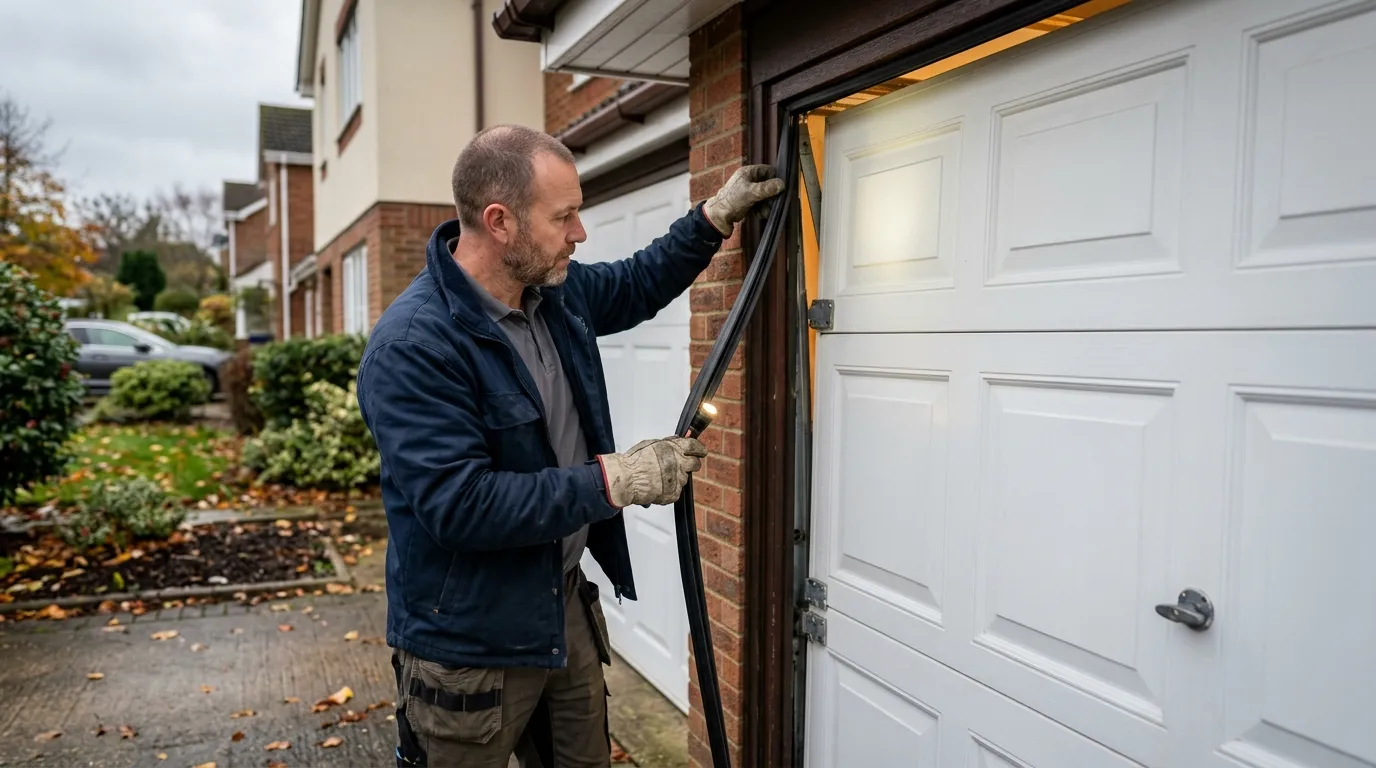
Mendota Heights is a smaller pocket of the territory we cover from Stillwater - about 4,740 households in all, which means we're not running a roller job here every day the way we might in a bigger suburb. But the calls that do come in tend to look alike, because the housing stock is consistent: median year built is 1983, so a lot of doors are on their second or third opener but still running the original steel rollers on the original track. You'll hear it before you see it - a grinding or clunking as the door travels, usually worse near the top of the run where the track curves into the horizontal section. Some owners notice the door hesitating or jerking rather than gliding. On a door that's been smooth for years, that hesitation is almost always a roller wearing out, not the opener failing.
On a 1983-era door, the roller stems are often the narrower gauge that doesn't match newer nylon roller kits exactly, so we check stem length and bracket type before we quote anything - swapping in the wrong roller size just moves the noise problem, it doesn't fix it.
Steel rollers with exposed bearings were standard equipment on doors built through the early 1980s, and Mendota Heights sits right in that build window. Those bearings run dry over time - there's no seal to hold grease in - and once the bearing surface wears, the roller stops rolling and starts scraping against the track instead. That's the grinding noise. Add in a cold-climate winter, where steel contracts and grease stiffens up, and a roller that was marginal in October can seize by January. We're not going to invent a specific storm or cold snap for this area, but the region sits in a severe cold band, and steel-on-steel roller wear accelerates in that kind of temperature swing regardless of which street the door is on.
The other common cause is simple mileage. A door that's been opened and closed a few times a day since the early '80s has put a lot of cycles on hardware that was never designed to be maintenance-free forever. Track misalignment from age can make it worse, but the roller itself usually fails first.
A straight roller swap - no track realignment, no spring work - is a short job once the truck is on site, but we're driving the 19 miles from Stillwater to get there, so we build that into scheduling rather than promising a same-hour arrival. Most jobs are a full-set replacement, all rollers on both tracks, rather than swapping just the noisy one, since the rest are usually close behind it in wear once one fails.
We'll tell you on the phone or at the door whether nylon rollers make sense as a replacement for the original steel ones - they run quieter and don't need the periodic lubrication steel rollers do, which matters more here given the income level and homeowner expectations we see across this part of the territory, where people tend to want the upgrade done once and left alone rather than revisited every couple of winters.
If the track itself is bent or the brackets holding it are loose, a roller swap alone won't quiet the door down - we'll flag that separately rather than sell a roller job that doesn't fix the actual noise. On a handful of 1983-vintage doors we've seen elsewhere in this cold band, the bottom bracket has rusted enough that it's not safe to pull without also replacing the bracket, and that's a different, more careful job than a roller swap.
One honest limitation: if the door is original from that build era and the track profile is an older discontinued size, matching rollers to the existing track can take an extra day or two on parts - we don't carry every obsolete track gauge on the truck. We'll tell you that up front rather than after the fact.
If the door grinds or jerks while moving but the opener motor sounds normal and the door still opens and closes fully, it's almost always the rollers or track, not the opener. Opener problems usually show up as the door not moving at all, or stopping partway.
On a door built around 1983, yes in most cases - nylon rollers run quieter and skip the periodic lubrication steel rollers need, which matters through a cold winter. We'll check your track and bracket type first since not every original setup takes a nylon roller without other adjustments.
Standard roller sizes are usually on the truck. If your door has an older or discontinued track profile from that early-1980s build era, matching parts can take an extra day or two, and we'll tell you that before we schedule the work.