Stillwater, MN · Garage Door Service
St. Paul Park homes mostly date to 1970, older than the area's 1978 median. We repair the springs, tracks, and openers these older doors actually have.
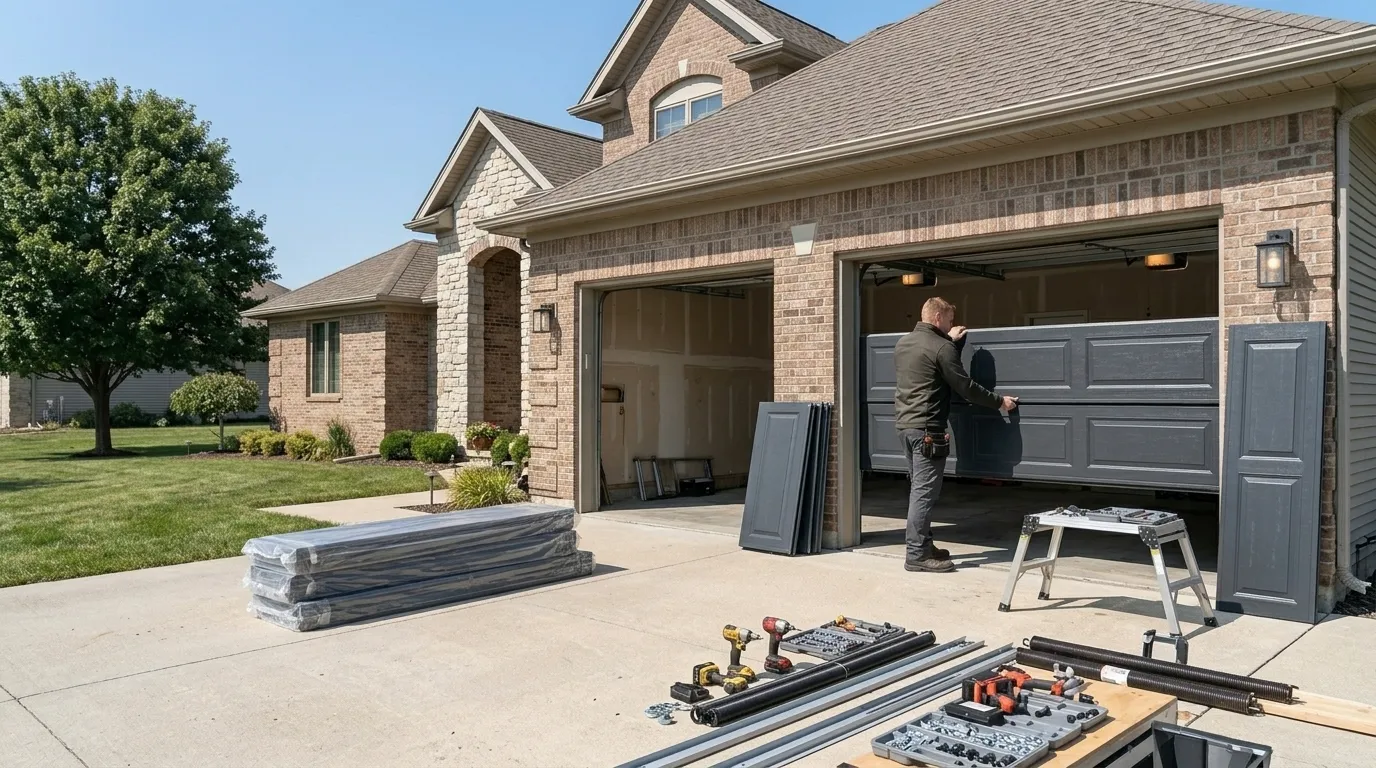
St. Paul Park's houses mostly went up around 1970, which puts this pocket ahead of the wider service area's 1978 median build year. That eight-year gap matters more than it sounds. A door installed in 1970 is more likely to be running on an early extension-spring setup or a first-generation torsion system than the newer torsion-and-nylon-roller combos you'd find on houses built in the late 70s and 80s. The steel sectional doors from that era also tend to run heavier gauge panels with less insulation, which means the springs and cables doing the lifting are working harder every cycle, especially once winter sets in. This region sits in a cold, severe climate band, and cold makes steel contract and lubricant thicken - both of which show up first on older hardware that's already logging more cycles per pound of door than what gets installed today. If your opener strains on cold mornings or the door drops the last foot instead of settling, that's usually the spring losing tension faster than it would on a lighter, newer door. We don't guess at what's behind the wall - we look at what's actually there before quoting a fix.
Across the broader service area, houses were built anywhere from 1950 to 2002, with 1978 as the midpoint and most of the stock landing in the 1960s and 70s across the 24 communities we track. St. Paul Park sits on the older side of that range at roughly 1970, with about 2,216 households in the immediate area. Median household income here runs around $98,670, a bit below the wider area's $108,560 - which tends to correlate with more owners holding onto original garage doors and hardware longer rather than replacing on a schedule. That's not a knock on the town; it just means when we get a call here, we're more often diagnosing wear on original or first-replacement equipment than swapping out a five-year-old opener board. Parts availability is the honest catch: some hardware from doors installed in that window is no longer made, and a repair sometimes means adapting a modern part to an old track rather than finding an exact match.
We run out of Stillwater, and St. Paul Park sits about 17 miles from our shop - closer than several towns we cover, farther than others like Oak Park Heights or Bayport. We don't have a location in St. Paul Park itself, so every call here gets scheduled as a trip out, not a walk-over from a local yard. That means we can't promise a same-hour arrival the way a shop based in town could. What we can do is give you a real window when you call, based on where the truck already is that day. If a spring lets go on a cold morning and the door won't move, say so when you call - a stuck door in freezing weather gets bumped ahead of routine tune-ups.
Our coverage runs out from Stillwater across two dozen communities, from Oak Park Heights two miles out to towns like Columbus and Mendota Heights closer to 19 miles away. St. Paul Park, at 17 miles, sits near the outer edge of that range rather than the middle of it. We still take the call, but distance is part of why we can't commit to the tight response windows we might quote somewhere five minutes from the shop. Beyond a certain radius, scheduling gets built around what else is already on the truck's route that day, so a call from St. Paul Park may get slotted next to a job in Newport or Afton rather than dispatched on its own. If you're outside the towns we list, ask when you call - we'd rather tell you honestly that a job is a stretch than show up late.
No. We work out of Stillwater and drive out to St. Paul Park, about 17 miles away, for every call. There's no local depot here, so we schedule the trip as part of the day's route rather than dispatching from somewhere in town.
St. Paul Park's homes mostly date to around 1970, ahead of the wider area's 1978 median build year. Doors from that period often still run original extension or early torsion spring setups, which wear differently than the torsion systems common on later builds nearby.
Sometimes. Hardware from doors installed around 1970 isn't always still manufactured, so a repair can mean adapting a current part to an older track or drum instead of finding an exact replacement. We'll tell you upfront if that's the case before starting work.
Yes. This area sits in a cold, severe climate band, and cold thickens lubricant and stiffens steel, which puts more strain on a spring that's already logging more cycles per pound than newer, lighter doors. That's usually why an older door struggles most on the coldest mornings.
Call now or request a free quote - same-day service on most repairs, upfront written pricing.